
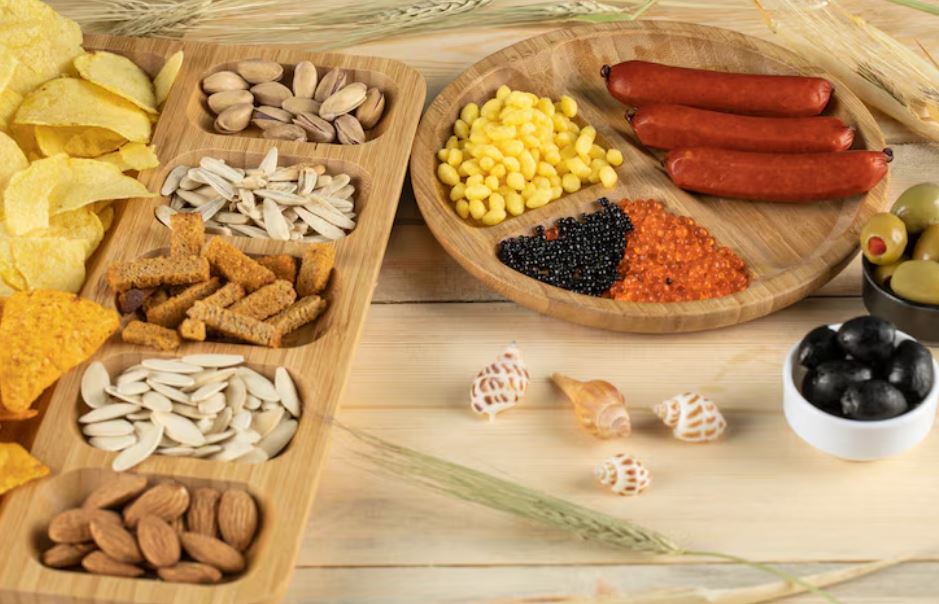
A favorite snack tells a tale with every bite. Food companies have remarkably mastered a combination of chemistry, marketing, and craving. The melt of cookies, the crunch of chips, and the gloss of candies are all produced by carefully crafted formulas that function remarkably similarly to emotional cues in advertising. These hidden ingredients gently mold our habits in addition to adding flavor to our food.
Transparency in snacking has grown in popularity over the last ten years. Celebrities who promote the beauty of understanding what’s on your plate, such as Gwyneth Paltrow and Kourtney Kardashian, have made “clean eating” an identity. People are reading ingredient lists with the same consideration as they do nutrition labels, which is a positive change that their advocacy reflects. It’s a contemporary and significant kind of self-awareness.
| Category | Ingredient Type | Why It’s Used | Health Impact |
|---|---|---|---|
| Hidden Sugars | Corn syrup, maltodextrin, rice syrup | Enhances sweetness and mouthfeel | Spikes blood sugar, causes energy dips |
| Artificial Additives | BHA, BHT, sodium benzoate | Preserves freshness and color | Can trigger inflammation, disrupt hormones |
| Synthetic Dyes | Red 40, Yellow 5, Blue 1 | Creates bright appeal | Linked to hyperactivity and sensitivities |
| Emulsifiers | Carrageenan, polysorbate 80 | Keeps textures creamy and stable | May disturb gut balance |
| Refined Grains | White flour, starch blends | Delivers crunch and structure | Lacks fiber, raises insulin levels |
| Animal-Derived Agents | Gelatin, L-cysteine | Adds texture or softness | Unsuitable for plant-based diets |
The most alluring secret is still hidden sugars. They go by charming names like rice syrup, cane syrup, and maltose, all of which are remarkably similar. After a brief dopamine surge, they leave you feeling exhausted and compelled to take another bite. This “bliss point,” the ideal proportion of sugar, salt, and fat that evokes pleasure without causing fullness, has long been the subject of research by food scientists at well-known brands. It’s incredibly successful marketing that passes for flavor.
Additionally, color has a psychological function. The glowing pink of candy or the vivid orange of cheese puffs are intentional invitations. Despite concerns about their long-term effects, synthetic dyes like Red 40 and Yellow 5 are still widely used. These dyes are hidden among fine-print ingredients in the US, but they have warning labels in Europe. There is a paradox: transparency decreases with increasing color brightness.
There is an alchemy to texture. Manufacturers maintain the ideal crunch or smoothness by using thickeners and emulsifiers. Every bite is consistent thanks to mono- and diglycerides in baked goods, polysorbate 80 in creamy snacks, and carrageenan in non-dairy milks. However, nutritionists caution that these substances might not be as safe as they seem, particularly for people with sensitive digestive systems. Often referred to as our “second brain,” the gut can have a significant impact on what the eye misses.
Another unseen actor is refined grains. They produce that luxurious, airy crunch or pillowy softness. They provide energy that burns out quickly, though, because they don’t have the same nutrient density as whole grains. It’s fast fuel that crashes quickly; it’s very effective for shelf life but not so much for the body. Convenience is the lifeblood of the modern pantry, but it frequently compromises durability for speed.
“Natural flavors” seem harmless, even comforting. However, they frequently include dozens of synthetic compounds made in laboratories from materials that are very different from the original fruit or spice. Although it leaves consumers in the dark, this ambiguity enables brands to safeguard trade secrets. Dr. Marion Nestle, a food researcher, observes that “transparency disappears when labels get creative.”
Ingredients derived from animals that are hidden add even more surprise. Gummy gelatin, insect-derived cochineal dye, and feather-derived L-cysteine are frequently found in foods that people believe are vegetarian-friendly. Transparency and taste can coexist, as demonstrated by the inventive ways in which plant-based snack manufacturers have substituted these ingredients in recent years with alternatives like agar, beetroot extract, or chickpea protein.
This awareness is becoming a selling point for an increasing number of brands. Businesses that prioritize simplicity over secrecy include Kate’s Real Food, Pnuff Crunch, and Healing Home Foods. In contrast to conventional snacks, they emphasize foods like oats, legumes, and seeds—choices that are not only nutrient-dense but also significantly less harmful to the environment. They are redefining indulgence as integrity by focusing on whole ingredients.
Cultural icons are echoing the clean-snack renaissance. Supporting transparency has become popular among athletes and actors alike. Hailey Bieber’s wellness initiatives and LeBron James’s nutrition collaborations demonstrate how food has evolved into a lifestyle narrative, reflecting not just fuel but also self-control, awareness, and even luxury. Their strategy reinterprets “healthy” as something achievable but aspirational.
The movement has a significant social impact. Clean snacking challenges consumers to consider the environmental and health costs of convenience. Waste and emissions are increased by overprocessing, artificial additives, and preservatives. Whole-food snacks, on the other hand, have shorter supply chains and require fewer resources. Making a different decision can literally change production patterns on a large scale.
Emotion is driven by memory, and food psychologists frequently observe that flavor is memory. Because of this, even unhealthy snacks can feel comforting. However, customers can take back control by being aware of these psychological triggers. Clarity can help people rediscover satisfaction rather than being driven by cravings created in corporate labs. Instead of being a sign of paranoia, reading a label becomes an act of empowerment.
Moreover, technology is being helpful. Label literacy is now more widely available thanks to apps like Yuka and Fooducate that decode ingredients. They identify artificial ingredients, scan products, and even recommend greener substitutes. Because it turns awareness into routine behavior, this democratization of knowledge is especially creative. The focus is now on progress rather than perfection, and this change is especially advantageous for public health.
Some would contend that we’ve grown unduly picky about what we eat. The reality, however, is remarkably straightforward: making educated decisions empowers rather than restricts. We can consciously enjoy snacks when we have a balanced awareness of the ingredients, indulging when we want to rather than when algorithms or formulas tell us to.
The term “snackable” is being redefined by us as consumers. These days, trust is more important than taste. You gain confidence instead of losing enjoyment when you know what goes into your favorite foods. The next time you reach for that glossy packet, keep in mind that curiosity is the true secret ingredient, not color, sugar, or salt.