
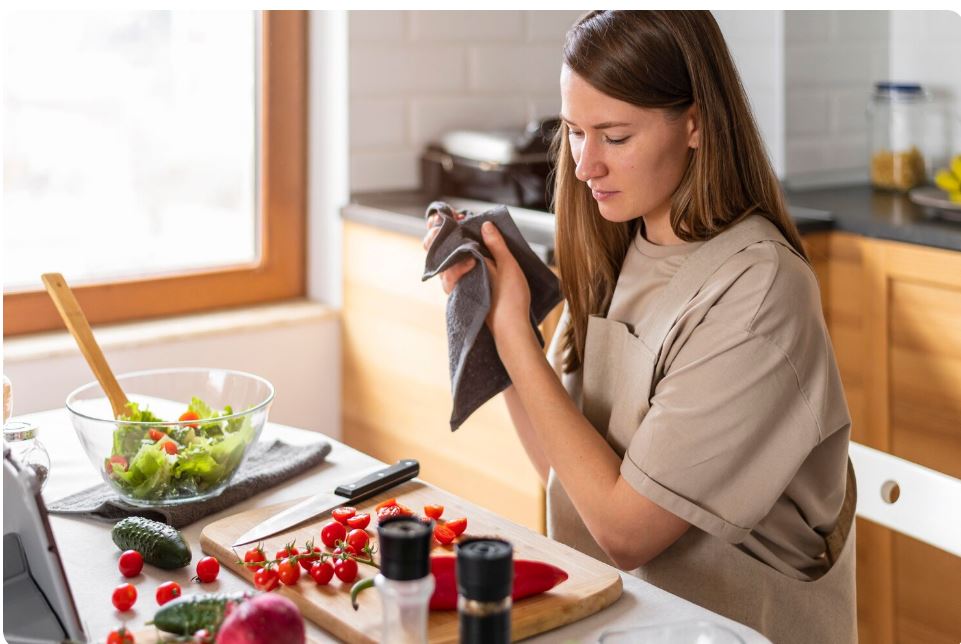
A smoothie bowl, a detox program, or a new fitness influencer offering a route to vitality are common innocent starting points. However, what begins as an attempt to “eat clean” can turn into something much more substantial. Physician Steven Bratman first used the term “orthorexia nervosa” in the late 1990s to characterize this obsession with eating purity. It’s a remarkably contemporary condition that reflects our culture’s fixation with image and control under the pretense of health.
Many people who develop orthorexic habits are initially unaware of it. They are encouraged by algorithms that reward perfection, commended for their discipline, and admired for their “glow.” Beneath that carefully manicured exterior, however, is frequently fatigue—social disengagement, a fear of deviance, and ultimately, nutritional exhaustion. The quest for ideal health can, ironically, result in a loss of emotional and physical equilibrium, as the National Institutes of Health points out.
| Aspect | Description |
|---|---|
| Disorder Name | Orthorexia Nervosa |
| Definition | An unhealthy fixation on eating only “pure” or “clean” foods, often leading to nutritional deficiencies and social isolation |
| Core Behaviors | Avoiding foods deemed “impure,” checking labels obsessively, and experiencing anxiety when preferred foods aren’t available |
| Associated Risks | Malnutrition, anxiety, obsessive-compulsive tendencies, and damaged relationships |
| Linked Traits | Perfectionism, control-seeking, and fear of contamination or imperfection |
| Common Triggers | Social media wellness trends, celebrity diets, and misinformation around “clean eating” |
| Reference | National Institutes of Health – Orthorexia Nervosa |
Orthorexia is based on purity rather than weight loss, in contrast to anorexia or bulimia. Being cleaner—physically, morally, and spiritually—is more important than being thinner. That subtle difference is where the danger is. Every meal feels like a possible failure when eating is seen as a moral test. According to Boston University dietitian Jennifer Culbert, this way of thinking is “a fixation that starts with intention and ends with isolation.”
The constant barrage of wellness ideals on social media over the past ten years has fueled this obsession. One could be led to believe that success is synonymous with clean eating by looking at influencer meal plans, supplement stacks, and immaculate salad bowls. With their filtered authenticity and bright lighting, social media sites like Instagram and TikTok have become havens for disordered eating masquerading as self-care.
Additionally, celebrities have been crucial in normalizing this obsession. Extremely strict diets that forbid gluten, dairy, sugar, and even nightshade vegetables are promoted by athletes like Tom Brady and models like Gisele Bündchen. They portray their routines as disciplined rather than hazardous. However, the consequences can be disastrous if followers imitate these practices without medical supervision. According to a recent UCLA Health study, anxiety and obsessive-compulsive behaviors frequently coexist with orthorexia, especially in high achievers who are control-hungry.
The moral undertone of orthorexia is a particularly illuminating feature. Many victims report experiencing shame or guilt after eating “unapproved” foods. A dessert turns into a sign of weakness, and a piece of pizza into a moral failure. Beyond the plate, friends and family frequently struggle to bond over shared meals, which exacerbates feelings of loneliness.
The fact that society still condones the very actions that indicate distress is particularly concerning. A person who counts every gram of nutrients consumed or completely abstains from processed foods may be seen as committed rather than disordered. The distinction between danger and discipline has become so hazy that even medical professionals find it difficult to discern between dangerous obsession and healthy commitment.
Intuitive eating is promoted as a healthier substitute by nutritionists such as Courtney Blomme from the University of Wisconsin. She says it’s important to pay attention to your body rather than the chatter on the internet. “Food should nourish, not punish.” Her viewpoint is especially novel since it redefines wellness as flexibility rather than restriction—a message that is becoming more and more crucial in a society that is addicted to extremes.
The irony is obvious: many people are losing their health in the process of pursuing it. Despite its noble origins, the clean eating movement frequently promotes a fictitious ideal of purity. A person’s relationship with food becomes poisonous when their sense of value is based on what they are eating. Eating itself, which is a profoundly human and joyful experience, turns into a transactional and fear-based activity.
The social roots of orthorexia are deep. Diet gives you a sense of control during a period when life seems uncertain. Food restriction, weighing, and measurement can give the appearance of stability. However, excessive control turns into coercion. Additionally, it narrows one’s life until little is left outside of the ritual itself, just like all compulsions.
Additionally, there is a cultural component that is worth considering. The notion that health is a tradable state is the foundation of the trillion-dollar wellness sector. The idea that achieving wellness necessitates sacrifice and financial commitment is further supported by detox teas, “superfood” powders, and supplements that promise to change lives. Moderation is what’s lacking from that story. In actuality, the most balanced, adaptable, and flawed diet is frequently the healthiest.
Orthorexia has psychological effects that go well beyond the kitchen. Increased anxiety, loneliness, and a persistent feeling of inadequacy are common complaints. There is little room for spontaneity or joy when the mind is overloaded with rules and routines. “It wasn’t about food anymore—it was about control, fear, and trying to be good enough,” a recovered patient told Bostonia Magazine.
Experts concur that treating orthorexia calls for both empathy and knowledge. Restoring balance and humanity to the act of nourishment is more important than giving up healthy eating. Culbert asserts, “We must cease transforming food into a moral battleground.” “You’ve lost sight of what health really means the moment you assign virtue to what’s on your plate.”
Small acts of defiance, such as eating a meal without reading the label, sharing dessert guilt-free, or accepting a dinner out without hesitation, are frequently the first steps toward recovery. These seemingly insignificant moments signify the return of freedom—the capacity to live fearlessly and eat without worrying too much.
Conversations in public are starting to change. Influencers are focusing on body neutrality and intuitive wellness while rebranding their platforms around “anti-diet” movements. Celebrities who support mental health over perfect appearance, such as Demi Lovato and Jameela Jamil, have publicly denounced the toxic nature of diet culture. Their candor has been remarkably successful in changing audiences’ perceptions of “healthy living.”
Orthorexia serves as a warning as society becomes more conscious of mental health issues. It serves as a reminder that wellness is a practice rather than a performance and that good intentions can still result in harm. Adaptability—the capacity to savor life’s entire spectrum of flavors without fear or guilt—is the true measure of health, not perpetual purity.
Though it started as a fad, the fixation on clean eating has become a reflection of our shared concerns about identity, control, and value. Perhaps the most nourishing act of all is to learn to turn away from that mirror and accept imperfection as a necessary component of health.