
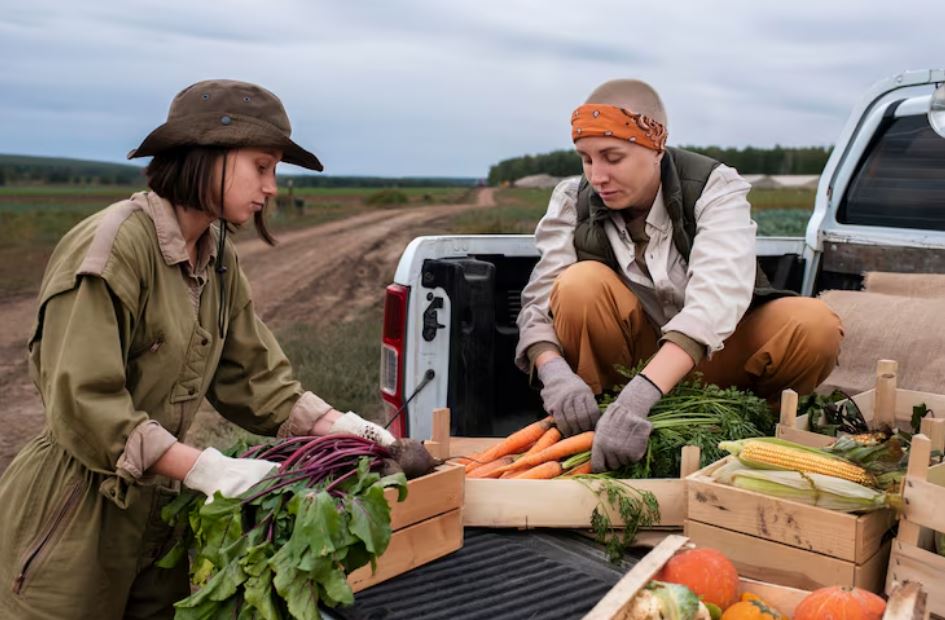
Our food system’s first responders in times of crisis—whether a pandemic, trade war, or flood—are not large distributors or multinational corporations. They are nearby farmers who are subtly building resilience in their communities. When ports close and shipping containers stall, they grow the lettuce that still makes it to the table. They are the new front line of food security, as agricultural economists now refer to them.
In recent years, their role has become remarkably evident. Through community-supported agriculture programs, small farmers continued to deliver directly to consumers while supermarket shelves remained half-empty during the pandemic. Larger, centralized supply chains were paralyzed by disruptions, but these farmers, who were frequently family-run and firmly established in their communities, quickly adjusted. When the global logistics system appeared to halt overnight, their adaptability proved to be incredibly effective in filling in the gaps.
| Aspect | Description |
|---|---|
| Core Function | Local farmers build shorter, resilient supply chains that ensure communities can access nutritious food during disruptions. |
| Economic Impact | Money spent locally circulates within the community, creating jobs, supporting families, and fostering local resilience. |
| Health Benefits | Locally sourced produce is fresher, richer in nutrients, and free from prolonged storage or excessive transport. |
| Environmental Role | Small farms rely on sustainable practices that restore soil, reduce emissions, and preserve biodiversity. |
| Social Importance | Farmers’ markets and CSAs build personal connections and foster food trust within communities. |
| Reference | USDA – Local and Regional Food Systems |
What experts call “short value chains” are formed by local farmers. By connecting producers and consumers within the same geographic area, these systems reduce reliance on lengthy, unstable transportation routes. The outcome is remarkably similar to that of a diversified investment portfolio in that the system as a whole does not collapse when one component fails. National Institutes of Health researchers found that during economic and environmental upheavals, communities with vibrant local food systems had significantly better food security.
The financial benefits are especially noticeable. Within the same community, every dollar spent on locally grown produce typically has multiple ripple effects. Local mechanics, grain suppliers, and even teachers whose students depend on steady incomes are indirectly supported when a family purchases vegetables from a nearby farm. The USDA claims that areas with local agricultural investments create more jobs and are less susceptible to market fluctuations. Because of its high efficiency, this cyclical benefit maintains stability even in the event of a decline in the domestic or global market.
Local farming adds a human element to the discussion of food, going beyond economics. These farmers are small business owners, families, and neighbors who have a deep understanding of the land; they are not anonymous suppliers. Their farms frequently cultivate a wide variety of crops, providing seasonal produce that is representative of local ecosystems. By decreasing reliance on single crops that are vulnerable to disease or climate extremes, this diversity enhances ecological resilience in addition to providing a culinary advantage.
The health benefits are equally compelling, according to nutritionists. Compared to produce that is transported across continents, fresh produce retains more vitamins and antioxidants. No imported tomato can match the flavors and nutrients of a tomato grown ten miles away, picked ripe, and consumed within days. “Fresh food is not only healthier—it’s hope served on a plate,” says Coming Clean Inc., a non-profit. These local systems have been especially helpful in reducing health disparities for communities that have historically had limited access to wholesome food.
Another reason local farmers are being praised more and more is environmental sustainability. Regenerative techniques that improve soil health and sequester carbon, such as crop rotation, composting, and natural pest control, are widely used by small-scale farmers. Local systems also drastically cut emissions related to fuel consumption and storage by reducing transportation distances. Every locally grown apple or carrot means fewer miles traveled, fewer emissions, and fewer chemicals dumped into the soil and air. The effects add up over time.
This renewed emphasis on regional farming reflects a larger trend in society toward independence. Local efforts are reestablishing community-based food networks across the United States, from the Grand Traverse region of Michigan to the Central Valley of California. Jen Schaap, the Food and Farming Director at the Groundwork Center, eloquently explains this shift: “When national systems failed, local farmers filled shelves.” They were stabilizing us in addition to providing us with food. Her observation demonstrates how resilience is now just as important to food production as nutrition.
Community trust is the fundamental idea behind these local systems. Direct connections between grower and buyer are made possible by farmers’ markets and CSA programs. Farmers are fairly compensated without the need for middlemen, and consumers gain confidence in the quality of their food. Like a handshake between generations, the arrangement feels both incredibly modern and antiquated. By encouraging connection and accountability, these partnerships build food systems founded on openness rather than catchphrases.
The message has also been amplified by cultural figures. Local food sourcing has become a celebrated standard in fine dining through the efforts of chefs such as Alice Waters and Dan Barber, who champion the farm-to-table movement. National attitudes toward local produce were even influenced by Michelle Obama’s “Let’s Move” campaign, which established school gardens and local sourcing initiatives. Their impact has been especially creative in changing eating habits from convenience to awareness.
Big-box stores are taking notice. Regional sourcing is now incorporated into the business models of chains like Walmart and Whole Foods. It’s a sensible decision—shorter supply chains are incredibly effective at preventing spoiling and enhancing freshness, in addition to being sustainable. By doing this, businesses decentralize supply risks and meet consumer expectations. What started out as a niche movement has grown into a vital component of public trust and smart logistics.
Of course, problems still exist. For many small farmers, infrastructure, equitable pricing, and land access continue to be obstacles. However, these obstacles are being addressed by new initiatives. Small-scale agriculture can grow sustainably with the right support, as demonstrated by initiatives like USDA’s food hub grants and “10 Cents a Meal,” which assists schools in purchasing local produce. These models show that supporting local systems is not only morally right, but also strategically sound from an economic standpoint.
The ramifications for society go well beyond rural areas. The importance of food security to national security is becoming more widely acknowledged. During times of crisis, reliance on imports for vital nutrition can lead to vulnerabilities that can affect entire economies. Creating strong local systems provides protection—a stable domestic base independent of remote networks and erratic geopolitics.
An intriguing development of this movement is urban agriculture. Concrete landscapes are becoming green havens as cities from Detroit to London reclaim rooftops and abandoned lots for food production. In addition to producing food, these projects give locals a renewed sense of pride, involvement, and ownership. Urban projects support rural producers by incorporating technology, such as hydroponics and vertical farming, which results in a more dispersed, networked system that is much more shock-resistant.
Every purchase made at a local grocery store or farmers’ market is an act of support for this cause. It’s a tiny but significant act that has a big impact and is a personal vote for resiliency and openness. In the words of the Groundwork Center, “Local economies grow one eater at a time.” This concept reinterprets food as a shared responsibility that starts with personal decisions and develops into group strength, rather than merely as a means of subsistence.
Local farmers are now the designers of a more dependable and sustainable future rather than the silent backbone of agriculture. In an era when stability, trust, and health seem more brittle, they cultivate more than just crops. Their research reminds us that resilience frequently develops gradually, season after season, in the soil just outside our backyards, rather than always coming from scale or speed.